

On Petra Bagust's podcast Grey Areas, Bishop Justin argues that climate change and AI are, at heart, spiritual crises – and that a broken story makes room for a better one.
Archbishop Justin Duckworth believes the story most of us were raised inside has run out of road.
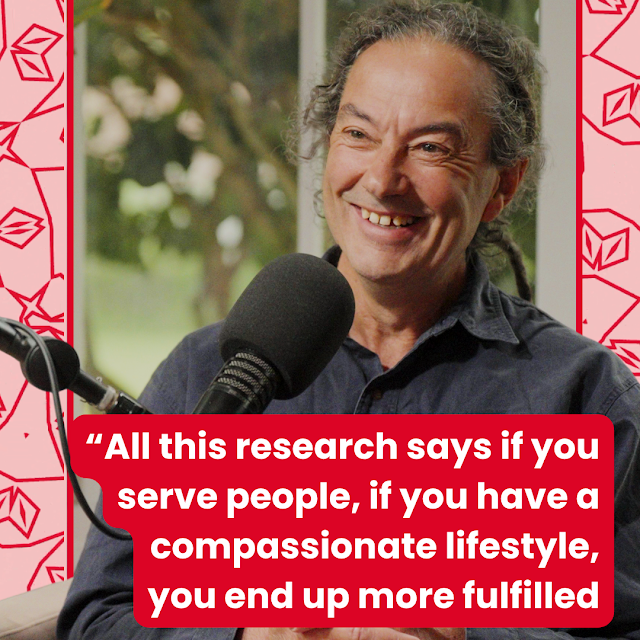
In a wide-ranging kōrero with broadcaster Petra Bagust on her podcast Grey Areas, the Bishop of Wellington – one of the three Archbishops of the Anglican Church in Aotearoa, New Zealand and Polynesia – described his adult life as a window in which the Western dream seemed to work.
"You could leave school and get a job … and you could own a home," he said, noting he was among the last to receive free university education.
"Now we look back and we realise that wasn't normative – that was a blip."
That window, he says, was built on an unsustainable resource boom that borrowed from future generations. Then came COVID-19, Ukraine, Gaza, climate change and AI. COVID in particular was both "catalytic" and "revelatory": it sped up what was already happening, and let people see it.
"The historical narrative that surrounded the world in the last 30 years is bankrupt," he said.
For Archbishop Justin, the two great challenges of our time – climate change and artificial intelligence – share a root. Both need nations to act together, yet each tries to strike a deal where someone else pays the price.
"We would rather destroy the world than conquer self-interest," he said. "That's a spiritual issue. It's called sin."
He admitted to dropping the word in "just to be really edgy", but stood by the diagnosis. What is needed, he argued, is a conversion of the heart, both personal and collective.
"Our generation is being asked, for future generations: will we be the generation who pays the price so that others can live?" For him, that question echoes the Christian story of "the one who came to pay the price so that we could all live".
It is a blunt assessment, and the Archbishop knows it. But he believes the collapse of the old story helps explain why church leaders across denominations are noticing people "randomly turning up" to explore faith – not because churches are doing anything new, but because people are searching for a better story.
Faced with problems this large, he says, it is tempting to pull up the drawbridge and retreat to Netflix and the vegetable garden, or to sink into despair. "Neither of those things are going to save us."
Instead, he holds to hope in a God who "has not left us", and to the vision Jesus called the kingdom of God – where "there's enough for everybody", the last are first, and every person has a seat at the table as "a creator and a contributor, not just a consumer".
He also believes we already know how to pay the price for others, because parents do it all the time. "We got up at three in the morning for our kids … because we want our kids to flourish," he said. "I'm confident that we can rediscover that, not just individually but collectively."
Listen to the full conversation
The episode also ranges over leadership under constant scrutiny, grace and forgiveness, decades of youth and community work, and the borrowed suit he wore to the Archbishop of Canterbury's installation.
Watch on YouTube or listen on Spotify.
Find all Grey Areas episodes at https://greyareas.nz.
