
By Petra Oomen
Church services are just the tip of the iceberg in the role of a vicar.
There’s a good chance you’re at least a little familiar with what a vicar is. You hear them preach. You take communion from them. You admire their funky-looking collar.
But what exactly is a vicar? What makes someone a vicar, and what does a vicar do?
The duties of a vicar
All vicars are priests. According to the ordination liturgy in our Anglican prayer book, priests are called to:
proclaim God’s word
take their part in Christ’s prophetic work
declare forgiveness through Jesus Christ
baptise
preside at the Eucharist
administer Christ’s holy sacraments
At church, vicars lead people through an interactive pattern of worship (called “liturgy”). They have studied theology, and have a robust knowledge of the Bible, so they can communicate it with their people – both from the pulpit and in conversation.
Church services are just the tip of the iceberg in the role of a vicar, though. They wear many hats! A typical week might include, finance meetings, prayer gatherings, admin emails, youth group, pastoral visits – the list seems endless. A vicar is not only responsible for the services that happen in a church building, but for the team that helps run those services, the people who attend, and for the building itself (or, in many cases, multiple buildings), as well as the various ministries that the parish provides. They maintain relationships with the people of their parish, making pastoral visits or equipping a pastoral team to care for their congregation. They baptise new Christians, officiate weddings, and hold funerals. A vicar works with the vestry to make governance decisions that ensure the smooth running of the parish. This could be anything from selecting a new colour for the curtains to approving the year’s budget to employing an elder care worker.
Even with a team, the role of a vicar is multi-faceted and requires a person with skills in many areas. But what are the most foundational characteristics of a vicar?
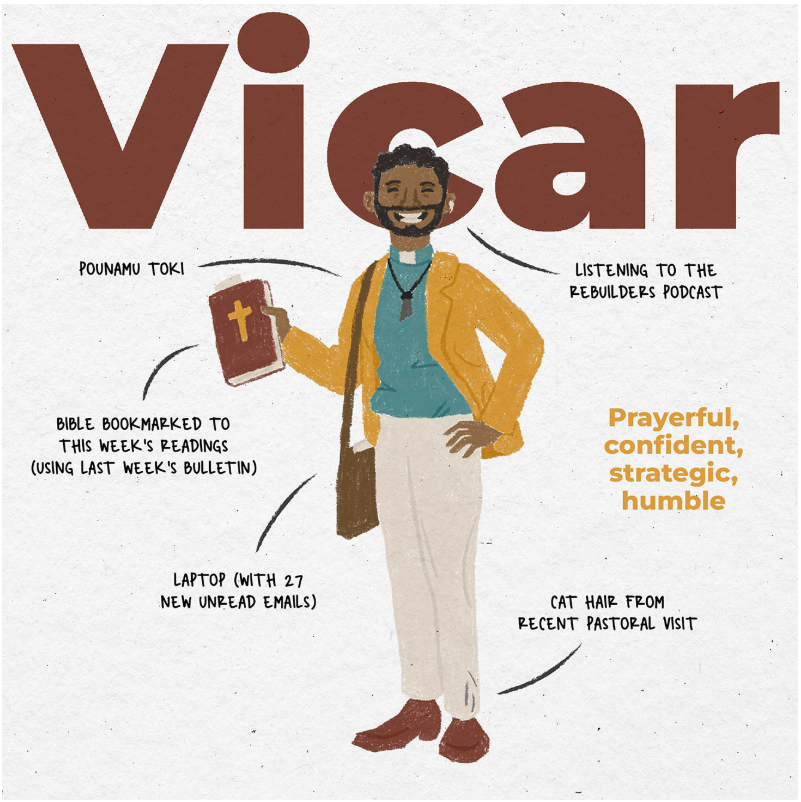
ILLUSTRATION BY PETRA OOMEN
Characteristics of a vicar
A personal and ever-deepening relationship with Jesus is fundamental. A vicar’s life should reflect the character of Christ in word and action.
Leadership skills are essential to the role of a vicar. Alongside knowing the gospel, vicars must be able to articulate it and guide church life accordingly. They need to be good listeners and clear communicators, making sure everyone is on the same page. Vicars also need to be able to think strategically, as they make practical decisions with their vestry that impact the future of the parish. They have to be emotionally mature and handle criticism with grace. A good vicar is self aware, humble yet confident, and manages conflict well.
A vicar also brings their own uniqueness and God-given strengths to the role.
Becoming a vicar
So how does someone actually become a vicar?
It starts with a sense of God’s call. Sometimes a person senses the call themselves, and sometimes their church will sense the call in that person and prod them to start thinking about it. That sense will be discussed with church leaders, and if it holds up, the person will move into a formal discernment process. This usually involves a panel of leaders who assess the candidate’s suitability for ordination. If they haven’t already completed a satisfactory level of theological training, they’ll start studying. If, after a long time of “testing the call”, all seems in order, the candidate is ordained. What does it mean to get ordained?
An ordination is the ceremony that bestows a person with a position of religious authority. In the Anglican tradition, those positions are: deacon, priest, and bishop. It’s a bit like how a wedding makes things official between a couple. There’s a period of discerning whether it’s a good idea, and then there are vows made in front of God, religious authorities and a group of witnesses, committing to love and serve the church. Once someone is ordained, they remain a “reverend” for life (and they can officially wear that funky collar).
So, the candidate is first ordained as a deacon. Becoming a deacon is a call in its own right, but if the person feels called to priesthood, they will serve in an apprenticeship-like role, called a “curacy”, shadowing a vicar. After this curacy is complete, they are ordained as a priest and are officially qualified to take on the role of a vicar. It’s worth noting that while all vicars are priests, not all priests are vicars. To become a vicar, a priest applies to lead a specific parish, undergoes a process of interviews and assessment by the vestry, before getting licensed by the bishop to that parish.
Hopefully this helps to show the breadth of a vicar’s job, and inspire new appreciation for the wonderful leaders that we have in our diocese. They work hard to keep their parishes vibrant and healthy to radiate the good news of Jesus with the communities around them.
