
Around 40 Anglican leaders spent two days in the Parish of Whanganui last week, hearing how a parish that once closed churches is now training and sending leaders for the diocese.
On 28 and 29 October, clergy and lay leaders from more than 30 parishes travelled to Whanganui for the latest forum run by the Tikanga Pākehā Mission and Ministry Conference (TPMC). The theme was revitalisation and renewal, and the Parish of Whanganui, which has gone from closing churches to sending out new leaders, was a natural place to explore it.
TPMC is a national body within the Anglican Church with a vision to inspire, equip and sustain ministry leaders, both ordained and lay. Its recent forums have covered ministry with the “third third” of life, creativity in Anglican worship, and flourishing smaller parishes, each drawing a different group of leaders together to learn from one another.
The Whanganui gathering came at the invitation of Archbishop Justin Duckworth, who wanted leaders to hear first-hand how a parish had moved from decline and amalgamation to growth.
Rev Stuart Goodin opened the first day by tracing that history, including the decisions that led the parish to close churches and eventually amalgamate. Revs Billy and Caleb Rowe then described how a deliberate focus on discipleship and team-building has made Christ Church a training and sending church for the diocese.
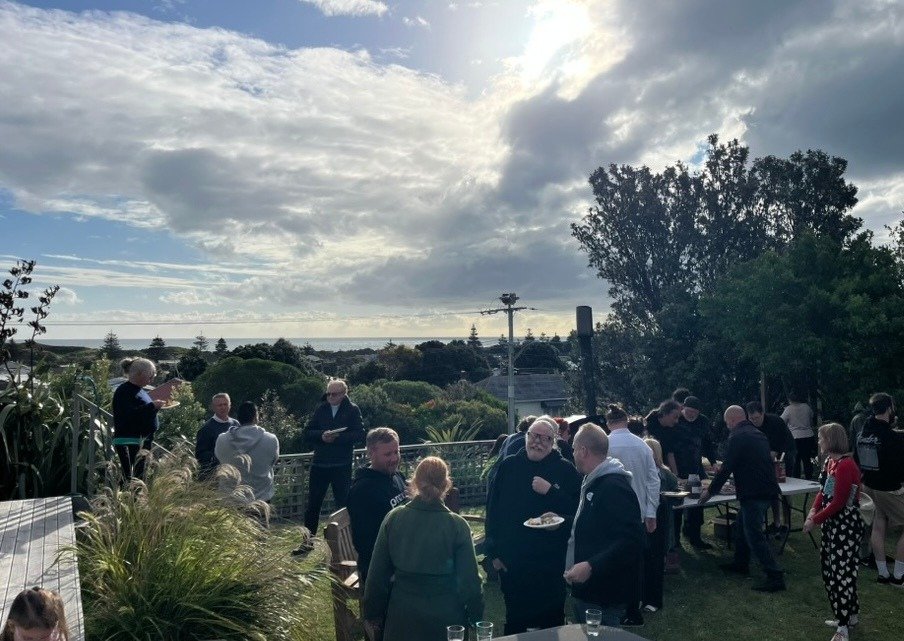
In the afternoon the group visited Castlecliff to see a different model of community engagement, before dinner at Archbishop Justin’s home, where the dio pizza oven was running hot and the manaakitanga was warm. The second day began with morning prayers at St Peter’s, Gonville, with Revs Sam and Luca Tovey Duckworth who are second generation leaders in what was a church replant, and finished in Whanganui East to hear from current Christ Church members committing to starting a new congregation there.
At each stop, participants broke into small groups mixed across dioceses to reflect on the kōrero. Leaders talked about where they had seen God at work in their own patch of Aotearoa, mistakes they would rather others didn’t repeat, and what their parishes had in common with Whanganui’s.
A number of themes were picked up on by representatives in our diocese.
One concerned the cost of change. During the hardest decisions, senior leaders in the parish were willing to take the heat themselves, which protected the newer leaders and gave them room to build something new.
Another was the steady work of growing leaders. Whanganui’s leadership has made a point of looking for people with potential and investing time in discipling them, so the parish’s capacity grows each time someone steps up. Shared language and tools have helped too, giving people across the congregations a common way of talking about faith and ministry, and with it a shared culture.
Wellington representatives also noted that the renewal has been carried by a team. A highly committed core group does much of the work, backed by a wider circle of support, so the weight doesn’t rest on one household.
Finances came up as well. The wider parish has committed to carrying a new congregation’s costs for a season, until it is established enough to meet its own expenses and then contribute to the overall parish budget. Because that pathway is agreed from the start, a young congregation has time to put down roots before it is expected to hold its own.
The forum stirred up plenty of conversation over meals and coffee and on the drives between sites, with much of it turning to what revitalisation might look like in parishes across the motu.
