

Synod Gathering Welcomed at Whakarongotai Marae
On Saturday 17 October, Synod members, clergy and bishops of the Diocese of Wellington were welcomed onto Whakarongotai Marae in Waikanae by Ngāti Toa Rangatira and Ngā Uri o Wī Parata, the descendants of Wīremu Parata Te Kākākura Waipunaahau. The visit signified the beginnings of a fresh relationship with the Parata whānau and Ngāti Toa Rangatira.
The relationship has deep roots. Wī Parata and Octavius Hadfield, the Kāpiti missionary who became Bishop of Wellington, were close friends. They are remembered side by side in a stained-glass window at St Luke's Church in Waikanae. The church stands on whenua Wī Parata gave, with the Parata whānau urupā right alongside. Saturday saw the Diocese seeking restoration after the relationship with mana whenua fractured in the late 1880s.
From the paepae, Kahu Ropata (Ngāti Toa, Te Atiawa) introduced manuhiri to his tupuna, Wīremu Parata Te Kākākura Waipunaahau who was born on Kāpiti Island around 1835 and schooled at Ōtaki.
He held high standing within Ngāti Toa Rangatira and Te Atiawa and was elected to Parliament in 1871, becoming one of the first Māori appointed to the Executive Council the following year, and helped establish the Māori Parliament. Kahu described Wī Parata as a man of remarkable generosity. Noting he sent kai from Kāpiti to the people of Parihaka even when his own whānau went without, and he was open-handed with settlers too. Above all, he spent his life for his people.
Ria Holmes (Te Ātiawa ki Whakarongotai, Ngāti Toa Rangatira, Ngāti Raukawa) spoke about why this matters: for too long, other people have told stories about the whānau for them.
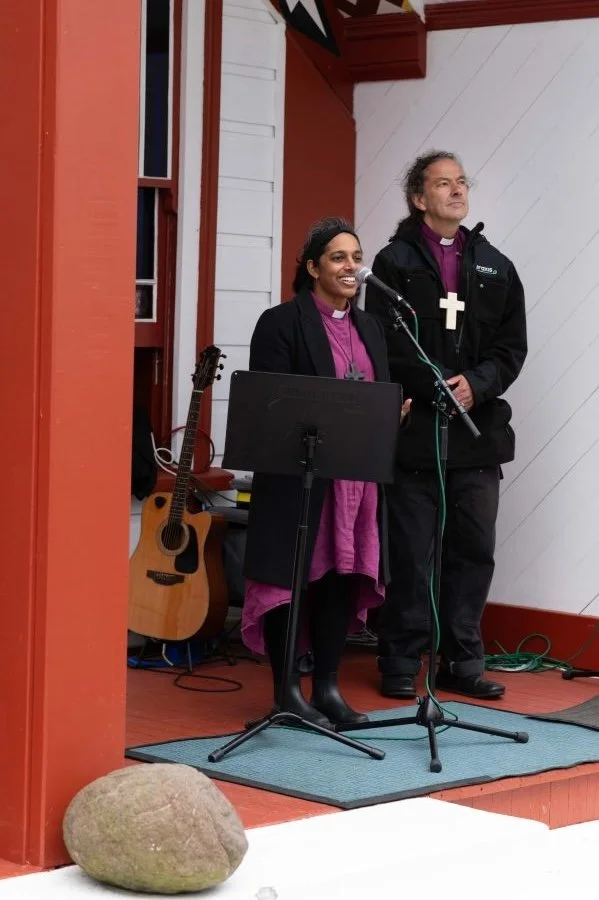
Bishop Anashuya Fletcher read an ōati, a solemn promise, signed by herself and Archbishop Justin Duckworth.
"We come seeking a renewed and restored relationship with you," it reads. "We want to face our shared history, to seek forgiveness, and to enter into a new relationship."
That history goes back to the late 1840s. Ngāti Toa chiefs made a tuku whenua, a gift of land at Whitireia, for a church college that was never built. The gift carried obligations of reciprocity and ongoing relationship, and the Church let them lapse. When Wī Parata sought the land's return, the Church stayed silent, and the 1877 court case that followed has overshadowed his legacy ever since.
The ōati owns that silence and the part it played in public misunderstanding of Wī Parata, "despite the enduring strength of his mana, leadership, and whakapapa." It commits the Diocese to work with Ngā Uri o Wī Parata in good faith and to support the wider aspirations of the whānau through the Church's networks, research, advocacy and voluntary expertise.
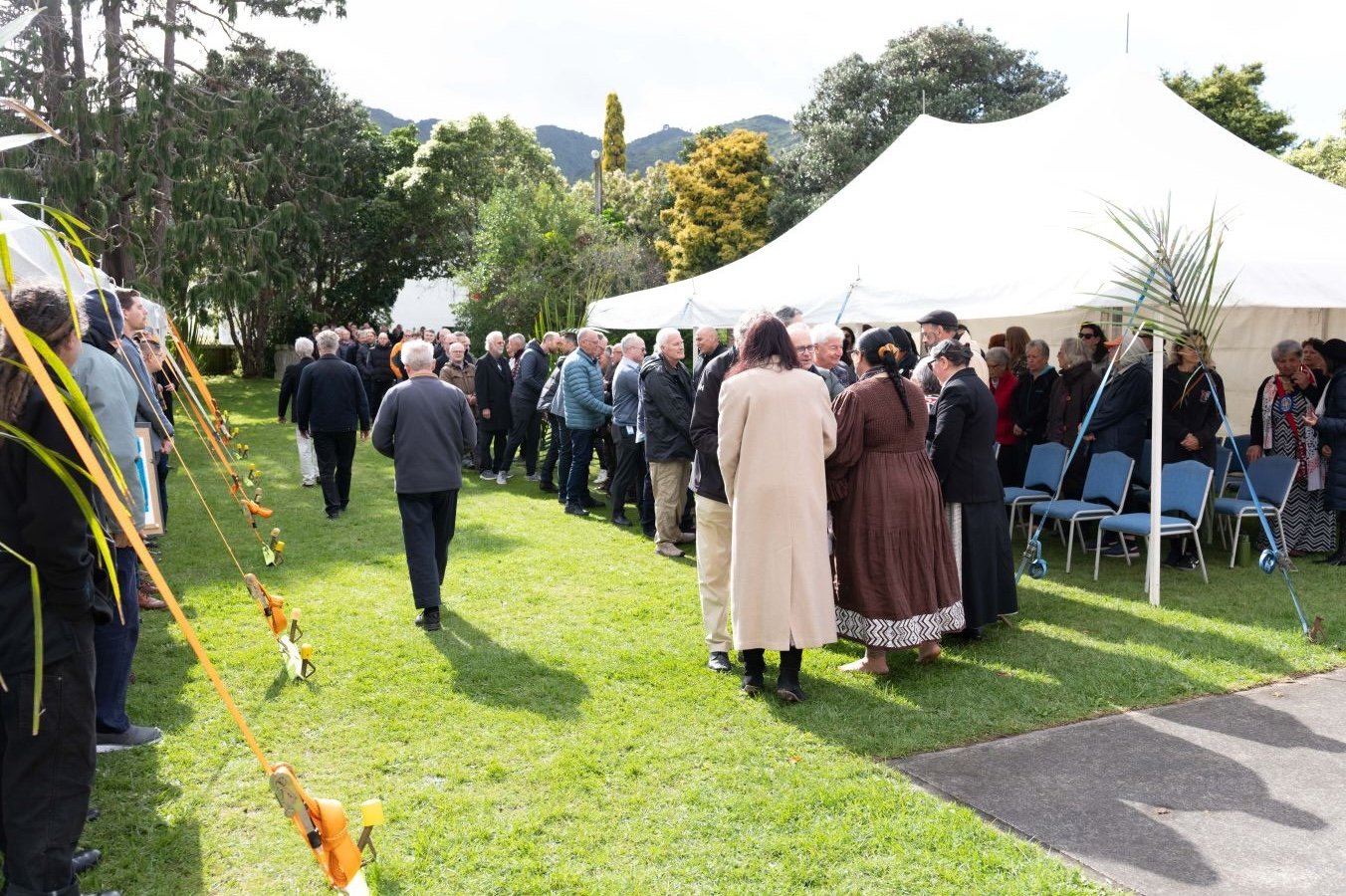
Members of Synod were then welcomed into the wharenui, originally known as Puku Mahi Tamariki and built as a whare wānanga. Like St Luke's, it was moved to its current site when the railway came through, and plenty of people wandered over to the church afterwards to see the window for themselves.
Speaking to Synod members on Friday evening, Archbishop Justin said "you don't get this very often in your life." He looks forward to the day the Church can stand on any marae in Aotearoa and say it has done what it can to heal this relationship. "That will be a great day," he said.
As the ōati puts it: "We look forward to this mahi, however long it takes."
