

On the third Sunday of every month, up to 25 people from St Tom’s Anglican Church in Newtown head up to Wellington's Green Belt on Te Ranga a Hiwi, armed with gloves, clippers, and buckets.
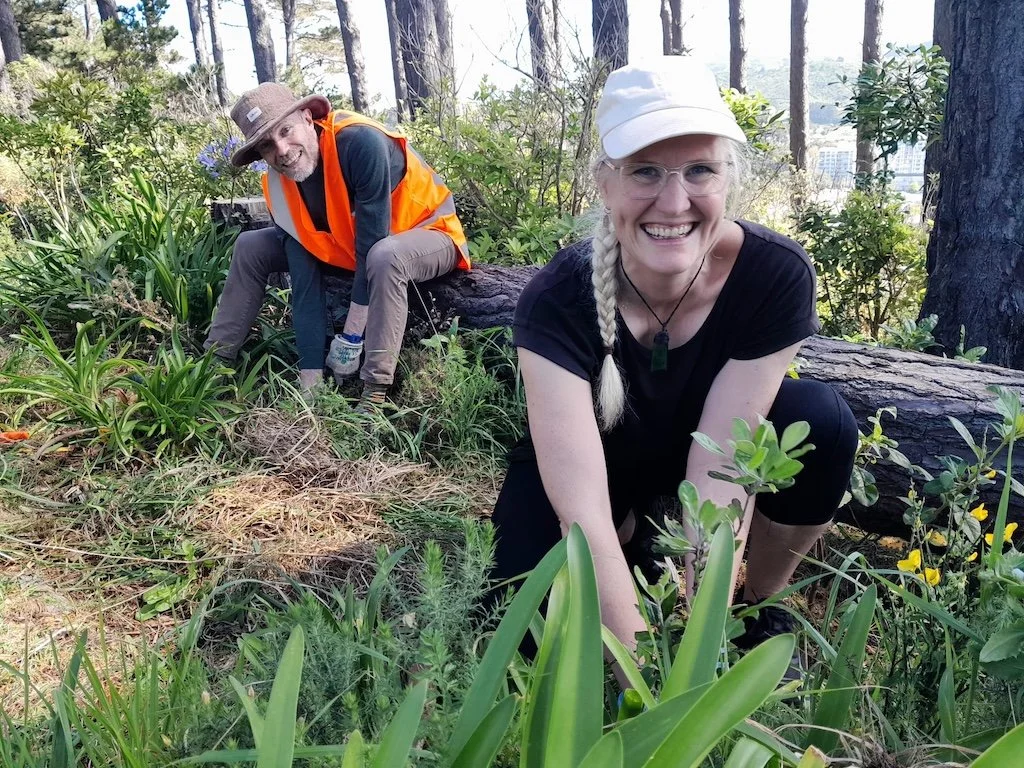
They are motivated by a vision for a restored natural environment in their parish (and the prospect of freshly baked muffins).
The working bees began in September and have drawn a steady crowd since. The last one for 2026 is on Sunday 20 December.
The mahi was set up by St Tom’s parishioner Manu Ward with Paul Forrest, a local art teacher and WCC volunteer kaitiaki, who provided orientation to the local history and where to best to put their efforts.
The group cares for newly-planted natives, like harakeke, ringaringa, kōwhai, ngaio and nikau. They lay fresh mulch and pull out invasive weeds that would otherwise smother the young natives.
The aim is long term. Native cover holds soil in place on the steep slopes and improves it over time. As the plants mature they will give food and shelter to birds returning to the area. Eventually larger native podocarps and broadleafs will replace the aging pines.
For Manu, the people taking part matter as much as the plants.
“It’s been really great for us to be part of and add to our rhythms of being church together in our community, says Manu.
“We see families coming with preschoolers as well. And just knowing that we’re improving the environment in our corner of the world, bit by bit, and understanding it better, is such a big bonus.”
“We know it’s early days – but it’s been a really positive experience for us so far. We’re aware of other parishes doing similar things. Te Ranga a Hiwi is just a few minutes walk from us so it’s a natural place for us to connect with.”
