
Sails 4 Hope Journey Carries Pacific Faith and Climate Witness
A traditional vaka named Uto ni Yalo — “Heart or Soul of the Spirit” — is carrying prayers, stories, and shared commitment across the waters of Fiji as part of the Sails 4 Hope programme, a faith-rooted response to the accelerating impacts of climate change across the Pacific.
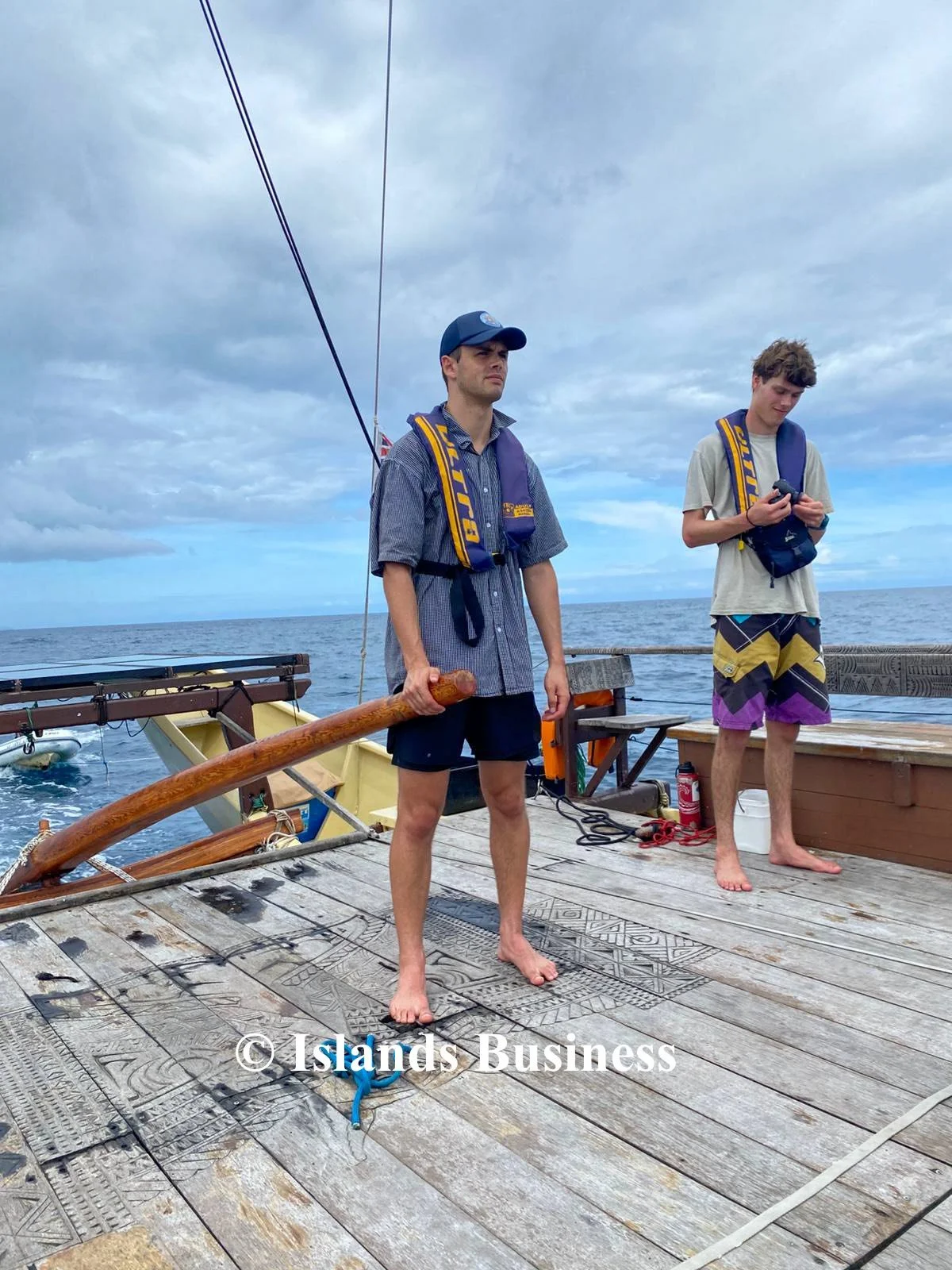
Micah Young and Micah Langham from the Diocese of Wellington
The sail forms part of the wider Soko ni Nuinui – Sail for Hope journey, which brings together Anglican communities across Te Moana nui a Kiwa in a shared time of learning, worship, and climate witness. On board the vaka are Micah Young and Micah Langham from the Diocese of Wellington, joining Pacific companions in an embodied expression of belonging, solidarity, and care for God’s creation.
The Anglican Church in Aotearoa, New Zealand and Polynesia understands the ocean not as a boundary but as a bridge — connecting peoples, cultures, and faith across vast distances. Within the Church’s Three Tikanga life — Tikanga Māori, Tikanga Pākehā, and Tikanga Pasefika — this shared ocean identity is central to who we are.
As climate change increasingly affects Pacific communities through rising seas, coastal erosion, stronger storms, and disrupted ecosystems, the Sail for Hope programme makes visible a theological truth long held across the Pacific: we belong to one another, and we belong to the Moana that sustains us all.
From 11–19 April, the Soko ni Nuinui journey unfolded across Viti Levu and into open sea, offering space for faith, reflection, and practical learning.
The journey began on 11 April in Pacific Harbour, following programme launch activities in nearby communities. Parents and children from Waidradra Church joined the crew aboard the vaka, learning about the journey and the calling that shaped it. This early stage created space for connection, preparation, and shared storytelling as participants moved from vision into lived mission.
On 12 April, the team gathered in Sigatoka, turning attention to life in river deltas and the growing realities of coastal erosion. This was a deeply grounded moment, listening to local experiences of environmental change and reflecting on how climate pressures are reshaping everyday life. Faith based responses were explored, rooted in community resilience, care for land and water, and pastoral presence alongside those most affected.
A rest and worship day followed, allowing participants to pause, pray, and strengthen relationships — an intentional reminder that this journey is sustained not only by wind and sail, but by shared faith and the renewing work of God’s Spirit.
From 14–16 April, the programme continued across Nadi, Lautoka, and Ba, highlighting the complex relationships between urban life, tourism, and coastal communities. Across these three days participants shared stories of ministry shaped by proximity to the ocean, explored new approaches to sustainable livelihoods, and reflected on the spiritual and economic importance of healthy marine environments.
These conversations recognised that many Pacific families depend directly on the ocean for food, income, and identity. Climate change’s impact on reefs, fisheries, and coastlines is therefore not only environmental, but deeply cultural and spiritual.
Throughout these gatherings, the vaka itself stood as a living symbol of collaboration: a reminder that no community sails alone, and that resilience is strengthened when knowledge, resources, and faith are shared.
From 17–19 April, the group returned fully to the sea, sailing toward Vanua Levu. These days at sea marked a time of transition and unity — space for reflection on what had been shared, and preparation for the next phase of the programme.
For those on board, including Micah Young and Micah Langham from Wellington, the open water journey became a form of prayer in motion. The rhythm of sailing echoed the deeper purpose of the voyage: listening to God, listening to one another, and listening to creation itself.
The Sail for Hope journey sits within a wider Anglican commitment to climate justice across the region. This commitment was recently affirmed at the Oceania Anglican Fono in Vanuatu, where senior Church leaders gathered under the theme “One God, One Ocean, One People.” Bishop Justin Duckworth, Bishop of Wellington and Archbishop of New Zealand, attended the Fono, which placed climate change, disaster preparedness, and regional cooperation at the heart of its shared discernment.
The Fono called the Church to a response that is both pastoral and prophetic: walking with communities already facing climate impacts, while also speaking clearly into national and global conversations about responsibility, justice, and care for creation.
The Sail for Hope programme embodies that call. It moves theology from documents into lived experience — onto the water, into villages, and across dioceses — reminding the Church that faith is something we carry together.
As Uto ni Yalo carries the hopes of children learning about their future, the wisdom of elders reading the signs of land and sea, and the shared identity of an ocean connected Church.
For Anglicans in the Diocese of Wellington, the sail is both invitation and challenge: to recognise our deep belonging within the Pacific family, to listen attentively to those on the frontlines of climate change, and to respond faithfully as stewards of God’s creation.
In a time of uncertainty, the vaka offers a quiet but powerful witness — that when we lash our canoes together, guided by the Spirit, hope can still find its way across the waters.
Vinaka vakalevu. Fa’afetai tele lava. Ngā mihi nui.
