

Opportunity for Action as “Move-On Orders” bill enters Parliament
Our movement whānau is being invited to reflect and respond as new legislation affecting people experiencing homelessness moves through Parliament.
The Summary Offences (Move-on Orders) Amendment Bill passed its first reading last week. If passed, it would give police the power to issue “move-on orders” to people sleeping rough, begging, or indicating an intent to inhabit a public place, with penalties of fines or imprisonment for those who do not comply.
Wellington City Missioner Rev Murray Edridge has described the introduction of the bill as “a sad day for this nation.”
In a reflection shared after the bill’s introduction, Murray acknowledges the importance of safe communities and effective responses to genuinely harmful behaviour. But he draws a clear line where the legislation extends beyond that purpose.
Rather than focusing only on disorderly or threatening behaviour, the bill, he says, risks applying the same penalties to people whose only “offence” is survival.
“Why would anyone who truly believes in what New Zealand stands for want to criminalise behaviours that many people, through no real choice of their own, are reduced to?”
Murray points out that rough sleeping and begging are widely understood — even by government agencies — as “survival behaviours.” Rather than addressing the causes of homelessness, he warns, this approach risks shifting the problem out of sight while leaving underlying issues untouched.
He also challenges us, as a society, to look inward:
“The people who are rough sleeping and begging… should be an embarrassment to the Government, and to all of us, that we as a community have not done enough to help them.”
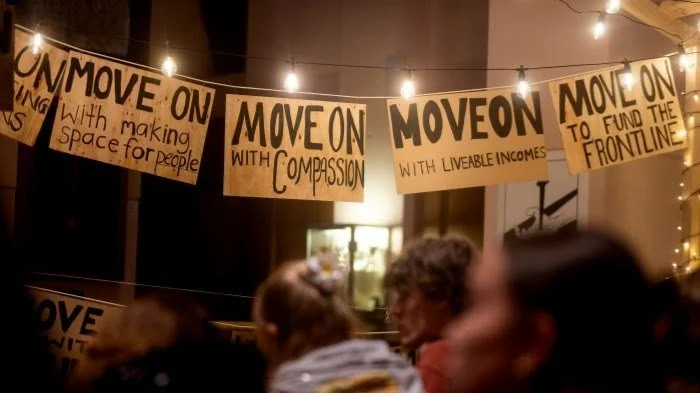
As people of faith, we are invited to consider what it means to uphold dignity, compassion, and justice in how we respond to those on the margins. Murray warns that if we allow laws that penalise those who have “done nothing wrong,” we risk losing something essential about the kind of nation we aspire to be.
Alongside voices in our Diocese, faith leaders in other parts of the country have also spoken out. More than 30 clergy in Auckland have signed an open letter urging the Government to prioritise stable housing and wrap-around support services instead of displacement.
They note that moving people on may disconnect them from community, support services, and care — doing little to resolve homelessness and, in some cases, increasing harm.
While these voices add weight to the national conversation, the call for us locally remains deeply personal: how will we, as a movement, respond?
Common Grace Aotearoa organised a prayer vigil in response to the proposed bill and has created resources to help parishes make submissions.
Click here to read a submission guide it’s prepared.
And, here to submit directly with Common Grace.
They encourage parishes to consider how we might encourage others in our parishes and networks to engage, be it through shared submissions, conversations, or prayer.
A strong and compassionate public response can influence how this legislation develops, and help ensure that the voices of those most affected — and those who stand alongside them — are heard.
