

When a family arriving in Wellington as former refugees opens the door of their new home for the first time, the first thing they see might be the cheerful face of a knitted monkey.
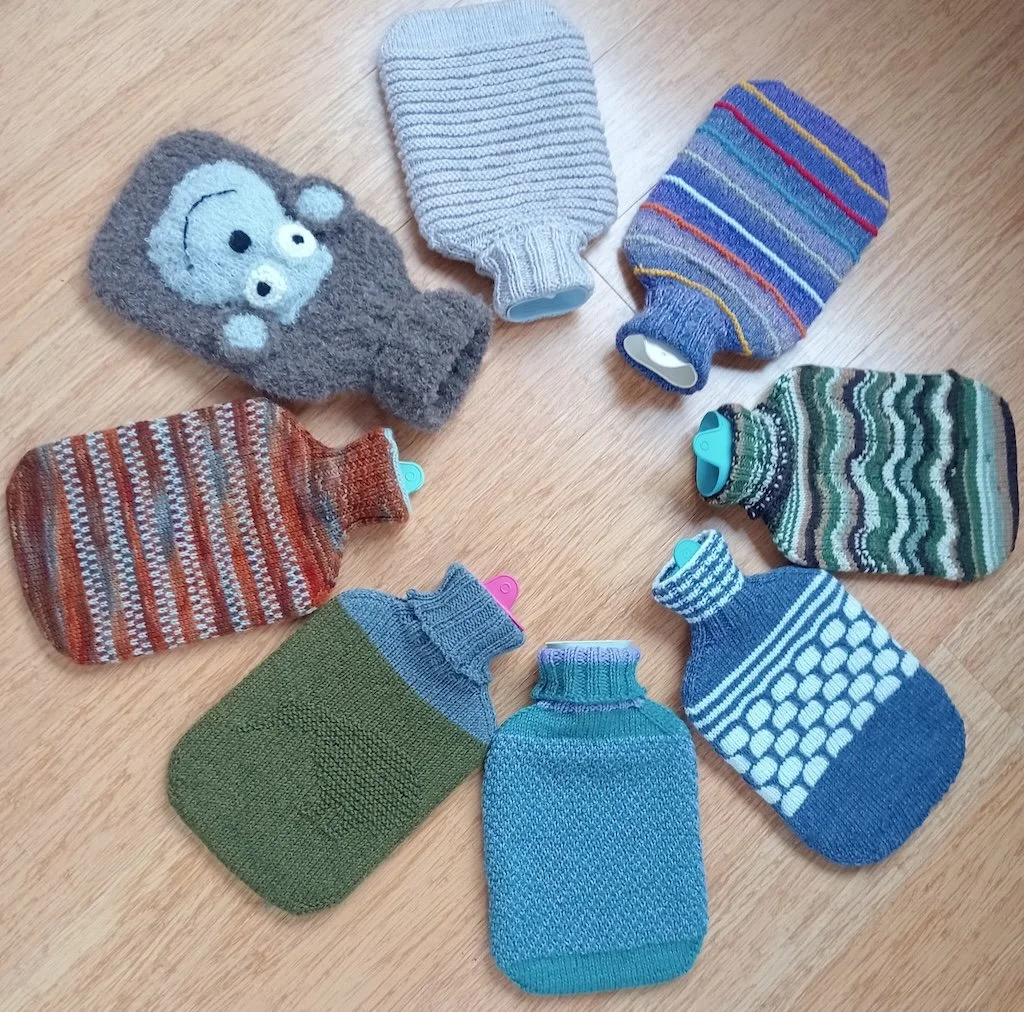
That monkey, on a hand-knit hot water bottle cover, epitomises the kindness of our Parish and Anglican Schools volunteers who support our former refugee home setup programme. The diocese works in partnership with the New Zealand Red Cross and the Catholic Diocese of Wellington to set up homes for newly arrived former refugees. Donated household goods and volunteers give their time to turn empty rental properties into places that feel like home. One of the household items provided is hand-knitted hot water bottle covers, each one made by a parishioner who wanted to offer warmth to someone they may never meet.
Julie, who coordinates former-refugee support at All Saints Hataitai and previously did the same at Tawa Anglicans, works closely with Phil McCarthy, the diocesan coordinator. She has watched this quiet ministry grow since COVID.
“Red Cross gives us a standard list to collect for, the items that make a house a home,” Julie says. “Hot water bottles and covers are a standard item, and they have to be new for hygiene and safety reasons.”
They are there for a practical reason, too. “The countries that refugees have come from are nearly always warmer than Wellington,” she says. For people facing their first southerly, a hot water bottle can make all the difference.
However, the rental properties where former refugees are housed tend to come in neutral tones, with beige carpets, plain curtains and pale walls. What the churches gather brings colour and welcome into those spaces.
When Julie put out a call for knitters in her parishes, she was “blown away” by the response. “Often they don’t even work to a pattern but to their own designs, so creative,” she says.
Each cover is different. Some are bright and patterned. One even features a raised kiwi design. Others double as cuddly toys for children, like the monkey. “I particularly like the ones that double as cuddly toys,” she says.
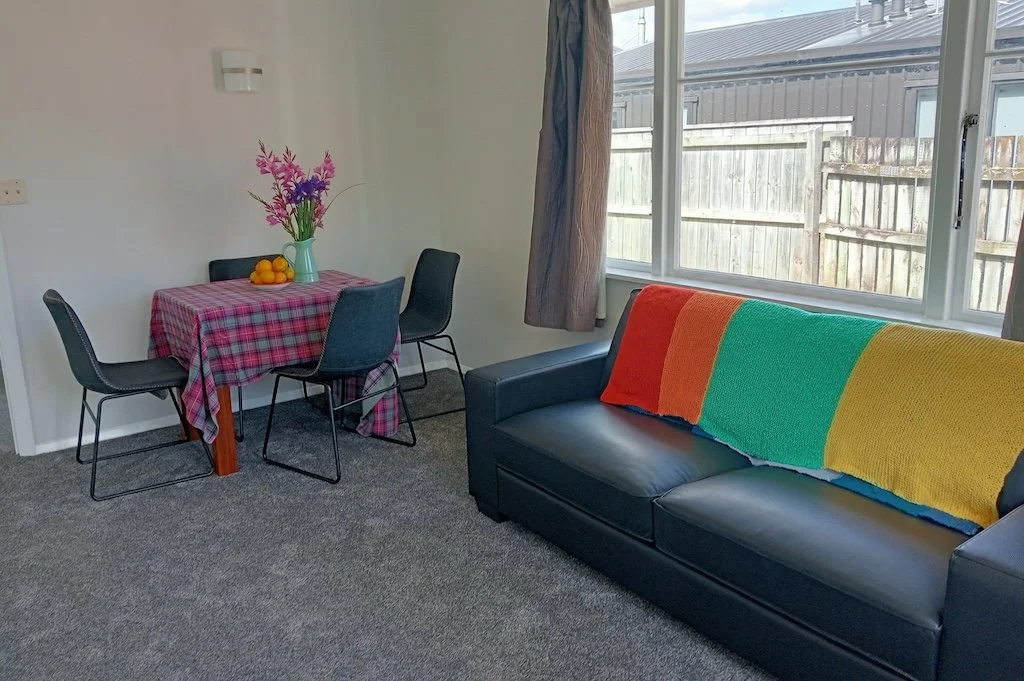
At a recent house setup for a couple, a vivid knitted blanket was draped over a black sofa. It was made by a member of All Saints. Hot water bottle covers proved too tricky for her, Julie explains, but she has “valiantly produced half a dozen blankets.”
The covers also tell a small Eco-Church story. Knitters use up odd balls of wool and spare buttons that might otherwise sit forgotten in a drawer. Shop-bought covers, by contrast, are often thin polar fleece or synthetic fabric.
Julie has also found a natural ally in the Sew Good Collective, a not-for-profit that uses recycled materials to teach sewing skills, including to former refugees. A friend who works there has gifted and discounted covers for the house setups. “Great synergy,” Julie says.
The knitters themselves are modest and prefer not to be named. Their work speaks for them. Each cover carries hours of attention and creativity, and a message that needs no translation: you are welcome here, and someone has been thinking of you.
For people who have been through so much, that kind of manaakitanga matters. A hot water bottle keeps out the cold, and a cover knitted by hand says that a community has made room for you.
Julie sees God at work in every part of the chain, from the knitter and the collector to the volunteer who makes up the bed. “We all bring different giftings to God’s kingdom,” she says.
Want to help? Julie has a hot water bottle cover pattern she is happy to share with anyone who would like to start knitting. To find out more about supporting house setups for former refugees, contact Phil McCarthy on refugees@anglicanmovement.nz
